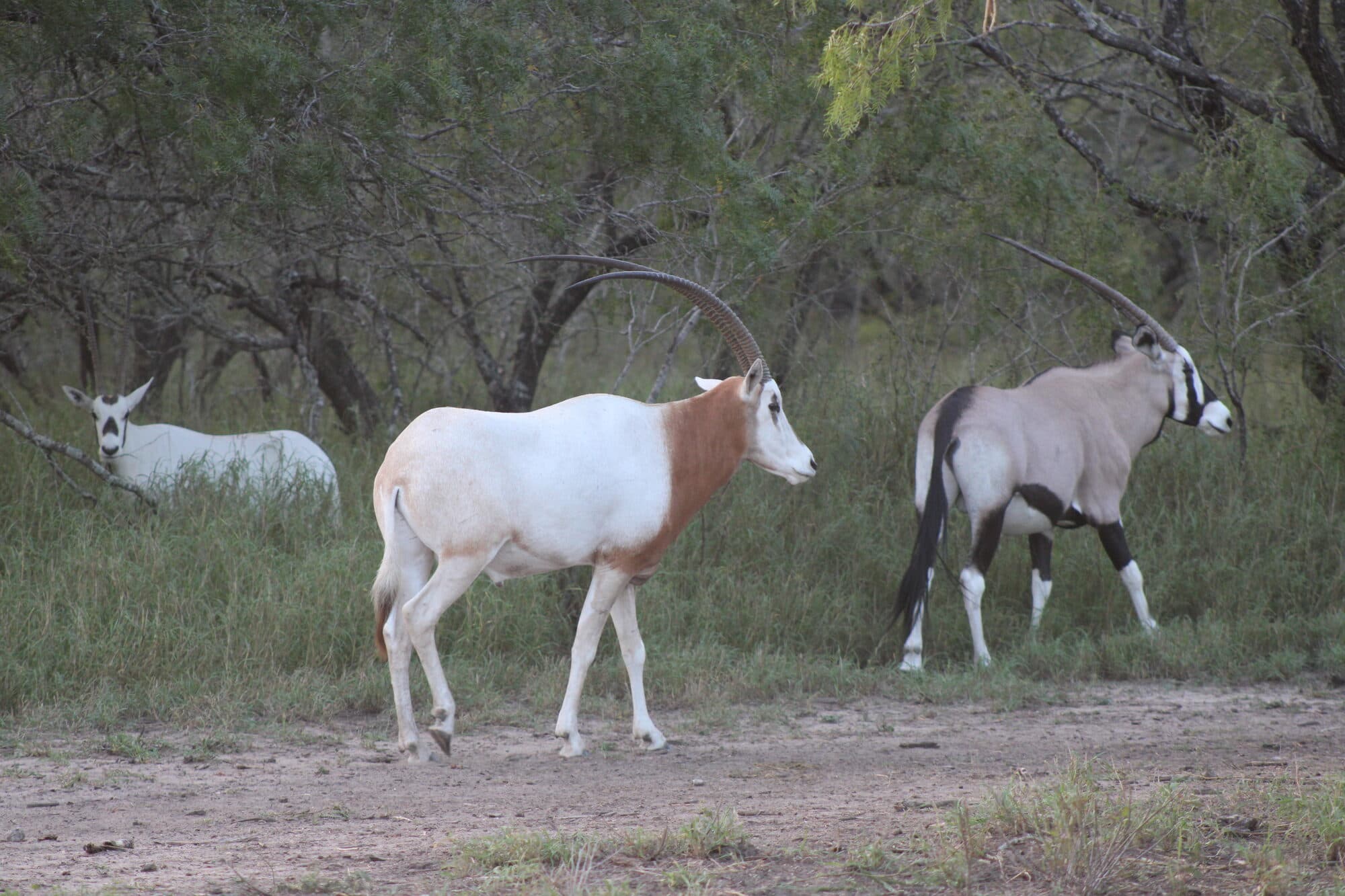
Photographed on the ranch.
Scimitar Oryx
Long swept horns on a pale, heavy bodied animal that reads from a distance. Both sexes carry horns, which makes judging one in the brush part of the hunt.
The animal
- Trophy fee
- $6,500
- Broken horn
- $4,000
The stay
Your stay is quoted with your hunt.
The trophy fee is the animal. Your lodging, guide and the rest of what comes with every hunt are priced with you when the hunt is planned, by the person who plans it.
No season. No draw. Texas hunting license required.
Plan this huntHunting scimitar oryx here
The scimitar-horned oryx was declared extinct in the wild across its native Sahel in 2000 and carried on in zoos and on ranches, Texas ranches holding some of the largest herds anywhere, which is a complicated fact worth sitting with. Animals bred in captivity have since gone back to Chad, and in 2023 the species was moved up from Extinct in the Wild to Endangered. Hunting one here is not in tension with that; it is the economics that funds it.
They are handsome in a way photographs undersell — a pale, nearly white animal on a heavy frame with a russet neck and a pair of long horns that sweep back in a shallow arc past three feet on a good one. Both bulls and cows carry horns, and cows often carry them longer and thinner. That single fact changes the whole hunt. Judging a scimitar oryx is not a matter of spotting horns in the brush, it is a matter of reading body mass, neck color and horn base thickness at distance, usually in bad light, usually with the animal quartering away. Your guide earns the fee on this animal more than most.
They are herd animals and they are not especially spooky, which makes the shot opportunity more forgiving than the identification. But they are big — a bull runs four hundred pounds and up — and they are built to keep walking after a poor hit. Use enough rifle, take the broadside shot rather than the quartering one, and be honest with yourself about the range. A wounded oryx in heavy South Texas brush is a long afternoon for everyone, and the horns on a wounded one are the same horns that make them dangerous to approach.
Hunt it your way
- From a blind, before the sun is up
- Safari-style, off the front of the truck
- However you have always liked to hunt